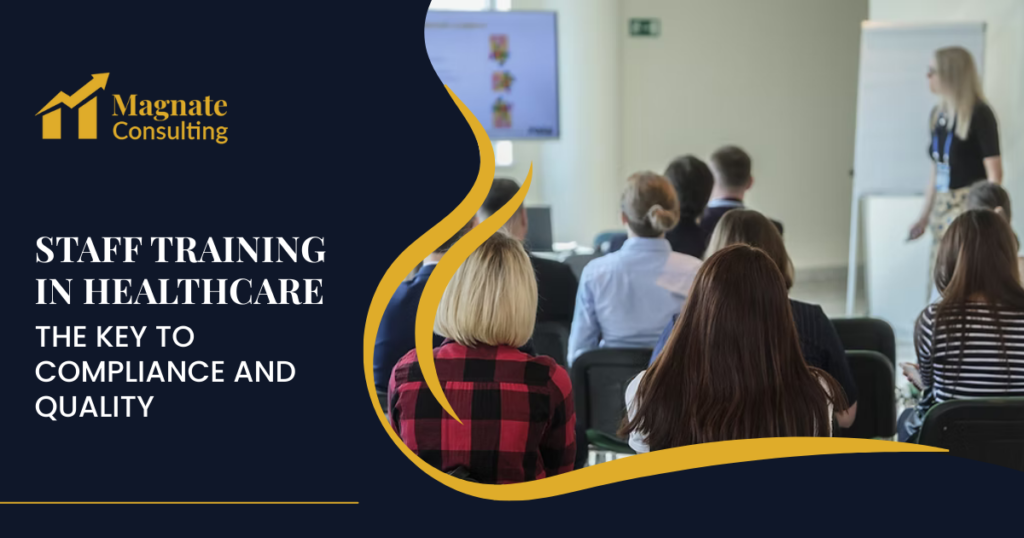
For healthcare providers, group home operators, and home care agencies, staff training isn’t a checkbox, it’s the backbone of compliance and care quality.Regulators like CMS, OSHA, and state licensing bodies consistently link poor outcomes to inconsistent training. Whether it’s medication errors, client rights violations, or missed documentation, most compliance failures start with a gap in staff knowledge.
Why Training Matters Beyond Compliance
Competent staff deliver safer, more person-centered care. In home- and community-based settings, untrained or undertrained staff can unintentionally violate care plans, skip safety checks, or fail to recognize abuse or neglect. Training isn’t just policy, it’s protection.
Strong training programs lead to:
- Fewer critical incidents
- Improved client satisfaction
- Reduced staff turnover
- Better audit outcomes
CMS and Regulatory Expectations
Federal rules (42 CFR §441.301 and §483.430) require staff to be trained and demonstrate competency before providing direct care. Many state Medicaid programs also demand annual refreshers on:
- Abuse, neglect, and exploitation prevention
- Individual rights
- Person-centered planning
- Emergency preparedness
- Infection control and universal precautions
Surveyors routinely cite providers for missing or outdated training records especially when orientation logs, sign-in sheets, or competency checklists are incomplete.
What an Effective Training Program Includes
A compliance-driven training plan should have three key layers:
1. Orientation
Start every new hire with agency policies, client rights, documentation standards, and emergency procedures. Use checklists to document completion and supervisor sign-off.
2. Competency Validation
3. Ongoing Education
Training Records: Your Best Defense
During audits, documentation is everything. Keep:
- Training logs with dates, topics, and signatures
- Attendance rosters or completion certificates
- Competency assessment results
Digital training management systems can help track renewals and automate reminders, a small investment that prevents costly deficiencies.
Checklist: Building a Training Program That Stands Up to Review
- Review CMS and state training requirements annually
- Create written training policies and procedures
- Use standardized checklists for each role
- Document all completed sessions and competencies
- Incorporate QAPI and incident trends into your training plan
- Audit training files at least quarterly
FAQ
Most states and accrediting bodies require annual training on core topics like abuse prevention, infection control, and client rights. High-risk services may require more frequent refreshers.
Sources
- Centers for Medicare & Medicaid Services (CMS), 42 CFR §441.301 & §483.430
- U.S. Department of Health and Human Services (HHS) – Office of Inspector General, Training and Education Guidance
- OSHA Training Requirements (2023)
- National Association for Home Care & Hospice (NAHC), Training Standards
Stronger training builds safer programs and fewer citations. Magnate Consulting helps providers design training systems that meet CMS, Medicaid, and licensing standards.